Search for a command to run...
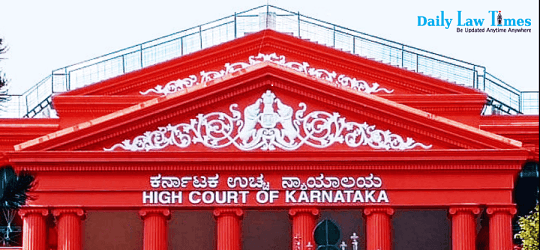
The Karnataka High Court held that litigants appearing in person must demonstrate the necessary skill to prepare clear pleadings and effectively argue their case.
The petitioner, an advocate identifying as a social worker and administrator of a Masjid and burial ground in Rudrapatna, Arkalgud Taluk, Hassan District, approached the Court seeking directions to government authorities to conduct a proper survey of land reportedly used as a Muslim burial ground.
The division bench of Chief Justice N.V. Anjaria and Justice K.V. Aravind observed, “This phenomenon of indisciplined irrelevant, unnecessary and long unrelated pleadings which are even otherwise, hardly up to the mark are seen in common whenever party-in-person appears either as petitioner or respondent and conducts the matter. Therefore, it is desirable that while assessing the competency to appear as partyin-person by the Committee under the High Court of Karnataka (Conduct of Proceedings by Party-In-Person) Rules, 2018 and before issuing Form 16 certifying party-in-person to be competent to appear before the court, their capacity to plead and draft the case properly as per the law of pleadings, should also be applied as one of the criteria. The party-in-persons who are not able to plead properly in their petition and draft their pleadings should not be granted the certification to argue in the court in-person.”
The Court noted that the petition, filed by a party-in-person, was marked by disorganized and excessive pleadings unrelated to the main issue, making it difficult to identify the core controversy. Nevertheless, the Court undertook the task of examining the matter due to the petitioner’s self-representation.
The Court added that it is evident from the facts that Survey No. 73 has been preserved for use as a burial ground for a specific community, except for a portion (1 Acre and 7 Guntas) that has been used as a public road by villagers even before the land grant. This explains the request for durast (adjustment) of 3 Acres and 10 Guntas. The remaining land is considered sufficient for the burial needs of the 305 people belonging to the said community.
The Court, after reviewing the state government's affidavit, noted that Survey No. 73 is reserved for a community burial ground, with part of it historically used as a village road. The petition was dismissed, and the Court directed authorities to continue protecting the burial ground from encroachments.
Read Here: